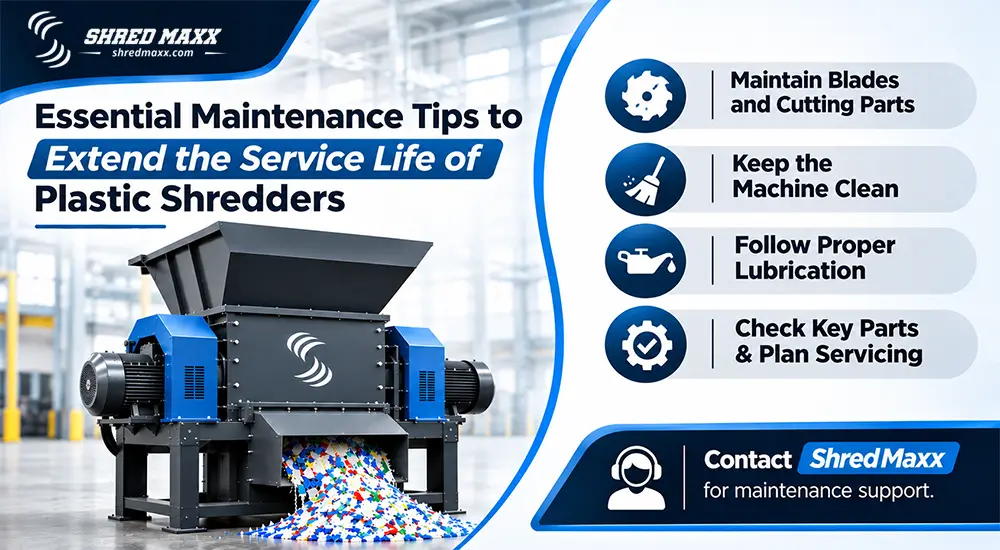
Rejected parts, pipes, containers and plastic trash are sorted and shredded for recycling or further processing in plastic shredders. Like any industrial machine, they need regular care. The blades can wear out, the screens can get blocked, fasteners may get loose or there can be inadequate lubrication, which may affect production leading to downtime.
An efficient approach is to check critical parts, consult the manual for the machine and detect any irregularities early enough. Regular maintenance will ensure maximum efficiency of the equipment and production. A checklist is useful to have when using Single Shaft Shredders for Plastic to perform these tasks again from shift to shift. ShredMaxx suggests that maintenance needs are suited to machine configuration and material to be shredded.
Blades wear out quickly and can become dull, chipped and uneven - particularly if processing abrasive material. Blades that are worn can cause uneven output, slow processing and put excessive strain on the motor.
Inspect blades as per manufacturer's recommendations. Turn, sharpen or replace only as directed. Check counter-knives and cutting clearances - lack of alignment leads to loss of efficiency and increased wear. Maintain adequate spares, if downtime would impact production.
Dust and plastic scraps may accumulate around the hopper, cutting chamber and discharge area. Accumulation can interfere with materials moving and cover up initial problems. In case of shutdown, ensure that the approved methods are used to clean the above-listed areas.
One should never attempt to reach into the equipment while it is operational. Supply should be isolated and then lock-out process carried out. All stored hydraulic or mechanical energy needs to be released safely by trained personnel.
Lubrication is necessary for moving parts, gears, and bearings for reducing friction. Overheating may occur when insulation is not sufficient, while the use of wrong type of insulation or insufficient quantity may create problems. The amount and type of insulation to be used should be according to the manual.
Look for leaks, heat and excess noise. Document when lubrication occurs and problems that are noted to find trends. Service intervals depend on the hours of service, material and working conditions.
If the machine has a screen attached to it, see to it that there are no obstructions, damage, and distortions present. This may cause delay in the rate of discharge and will stress the machine. Maintain the screen as per the specifications required in order to accommodate the output required.
Check the condition of the fasteners, guards, couplings, and belts to see whether there are signs of wear and loose parts. Maintain the fasteners as per the specifications required. Check whether the guards and interlocks work effectively. They should never be removed at all.
Such issues can easily be recognized by the operators, who may be experiencing issues such as too much vibration, grating sounds, jamming, heavy loads, and low levels of productivity. These issues need to be sorted out without any more delays; otherwise, the machine needs to be shut down immediately.
If not for the machine, remove all metal and other contaminants. Do not overfeed and use the recommended feeding technique. Regular feeding minimizes cutting and drive part stress. Maintain work area clear, train operators to report on problems early and clearly define maintenance responsibilities per shift. This also helps to ensure safe daily production.
Maintain an inspection, cleaning, oiling, blade changing, repairing, hours operated, and recurring problem log. This data is useful for planning servicing and part acquisition prior to wear disrupting production.
Schedule planned maintenance operations based on usage, not breaks. If a repair is a complex procedure or the problem has happened more than once, please call the supplier. ShredMaxx provides maintenance services, operator training, spare parts and annual maintenance. Follow the service schedule of your machine.
Inspection, lubrication, cleanliness of the area, and servicing are among the many means through which the plastic shredders will be able to function effectively without encountering unnecessary interruptions. Single Shaft Shredders for Plastic require maintenance that will suit the type of machinery and the kind of tasks they undertake.
For more information about maintenance services, contact ShredMaxx.
Always maintain it regularly by following the maintenance schedule offered by the manufacturer based on its operation and material used.
Other noises and vibrations than usual, frequent jams, a decrease in output or overheating are signs of a problem that must be addressed.
Yes. Cleaning, lubricating, inspecting, and servicing will help avoid early wear and avoid any malfunctions. Single Shaft Shredders for Plastic need to be serviced according to their respective manuals.