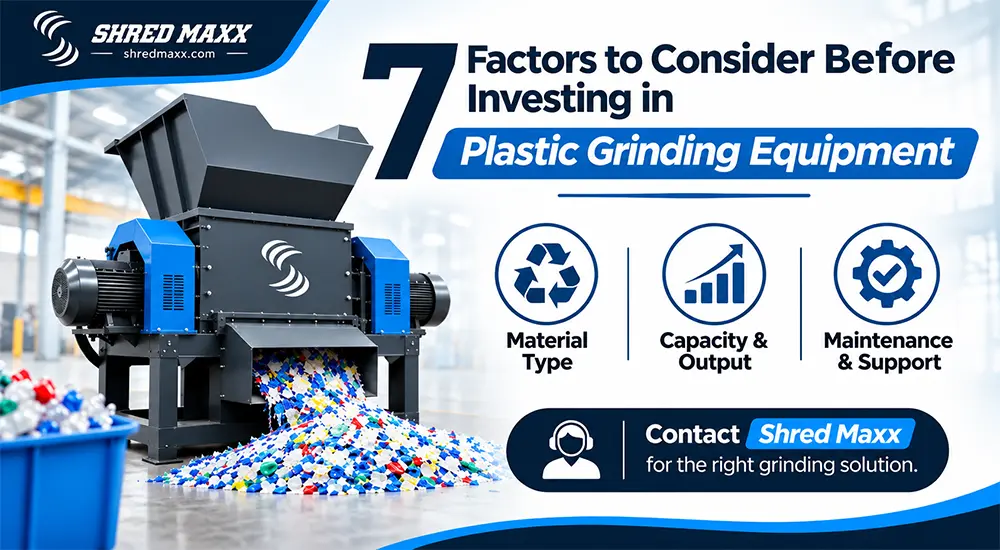
Management of plastic waste is always a problem in factories, recyclers, and plastic processing plants. If not handled properly, rejects, waste from the production process, and scrap plastic material can occupy valuable storage space. The plastic grinding equipment is used to grind suitable plastic waste into smaller pieces which can be reused in the manufacturing process or sent for further recycling.
However, choosing the right machine requires more than comparing prices. When a business is considering investing in a Plastic Scrap Grinder Machine, some factors that they should take into account are material needs, output volume, product quality, and operation costs.
The first task would be to determine which plastics you want to grind. Different types of plastics differ with regards to their hardness, thickness, flexibility, and even sharpness. It could be that other materials like HDPE, PP, ABS and others will have to be treated differently while grinding.
Determine whether your machine can handle your actual scraps including rejected moulded products, runners, and sprues. Conducting representative sampling tests can aid in confirming equipment compatibility prior to equipment purchase.
The size of a machine can directly impact the efficiency of a facility in handling its waste. A small unit or one with few scaps may require smaller processing capacities than a large manufacturing plant that has several production lines.
Estimate the quantity of plastic waste generated per hour or shift. Then choose equipment that is appropriately sized for your frequent needs, but not too much. The right Plastic Scrap Grinder Machine should be able to complement your production process and have enough margin for process changes if needed.
The size of the particles desired will vary according to the intended use of the ground material. For example, if the material is to be used for a different recycling process, then it may need to be a more uniform size than material that is being prepared for reuse in a manufacturing process.
The final product can be affected by screen size, blade shape, materials fed and machine settings. Discuss your requirements with the manufacturer and ask about achievable particle sizes. Consistency is especially important when the ground plastic is being mixed with virgin material for predictable processing results.
A grinding blade comes into repeated contact with the plastic materials, so there is a need for consideration of its durability and maintenance. The condition of the blades, the angle of cutting and the nature of the material may also affect the results of grinding and the servicing of the machinery.
Before purchasing the machine, it is necessary to know everything about blade inspections, blade sharpening and calibration, and their replacement. You should also know about the availability of replacement of spare parts and its cost. Servicing will help you avoid unexpected downtime and high productivity.
Purchase price is just a component of the total investment. Operating costs include electricity consumption, labour, maintenance, replacement blades and routine servicing.
With the machines you are comparing, determine the performance you would expect in your normal working conditions. A higher capacity machine does not always represent the most cost-effective purchase for your facility because you may not use that capacity very often.
You can contact Shred Maxx to discuss the requirements for the application and determine which grinding solution might be right for your operation.
The industrial grinding equipment should be suitable for the operators and maintenance personnel. Check for proper guarding, emergency stop, feeding, and protection against accidental contact with moving parts.
Evaluate the ease with which the operator can load material, clean the machine, and perform inspections. Avoidable hazards can be avoided through proper instructions and training. Do not remove the safety devices or make any repairs when the machine is in operation.
When equipment is integral to the production process, reliable after-sales support comes into play. When considering a purchase, inquire about installation instructions, operator training, maintenance spare parts, warranties and technical support.
Check the machine's specifications thoroughly and ask to see the machine if possible. Provide the supplier with a description of the type of material, the amount of space needed, and the purpose of the material. When considering Plastic Scrap Grinder Machine options companies should take into account the overall solution, not just the initial quote.
Plastic grinder machines may be purchased in order to make production scraps easy to handle and ready for reuse or recycling. This will be based on whether the materials are compatible, capacity, the size of the production, maintenance, operational cost, safety, and technical support.
Shred Maxx can assist businesses in considering viable waste processing solutions that meet their needs. By taking the time to evaluate these seven factors, it will be possible to invest in a more practical and cost-effective way.
Contact Shred Maxx and speak with someone about the requirements of your plastic scraps and what will be the best grinding solution for your company.
It reduces appropriate plastic scraps to smaller pieces which can be reused or recycled.
Efficiency could be affected by the nature of the plastic, condition of blades, feed, screens, and capacity.
Material, volume of scrap per day, size of product, maintenance, and operation cost should be considered.